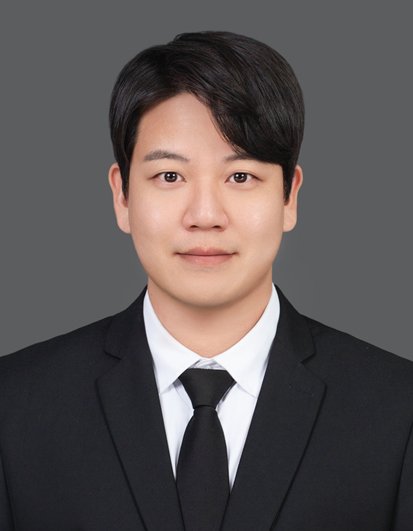
Biography
I am a Postdoctoral Researcher in the Lyles School of Civil and Construction Engineering at Purdue University. I have conducted my doctoral research in UMNILAB under the guidance of Dr. Satish V. Ukkusuri. My work develops physics-informed and data-driven methods to model, estimate, and secure network traffic dynamics in connected and autonomous mobility, with a particular focus on transportation cybersecurity and behavior-aware resilience under route guidance attacks.
My research develops physics-informed and data-driven methods to model, estimate, and secure network traffic dynamics in connected and autonomous mobility. My dissertation, Physics-Informed Neural Networks for Secure Connected and Autonomous Traffic Modeling, centers on network resilience and reliability, user behavior, and transportation cybersecurity.
My current research focuses on:
- Physics-informed learning for network-scale traffic dynamics and state estimation: scalable modeling and inference for large-scale urban networks using traffic-flow theory and physics-informed learning.
- Network resilience under climate and cyber disruptions: quantifying how climate-driven disruptions and cyber disruptions propagate through transportation networks, and developing reliability- and recovery-oriented modeling and decision support for resilient operations.
- Behavior-aware transportation cybersecurity: modeling and mitigating route guidance attacks and related adversarial behaviors by integrating behavioral models and game-theoretic insights.
- Graph and network learning for large-scale mobility data: improving data completeness and reliability for network monitoring and downstream control/management tasks.
Overall, my goal is to enable trustworthy, resilient, and scalable mobility decision support by integrating traffic theory, machine learning, and behavioral modeling to operate under uncertainty and compound disruptions.
Education
Dissertation Title: Physics-Informed Neural Networks for Secure Connected and Autonomous Traffic Modeling
Courses:
Generative Models (ECE695), Neural Network Numerical PDEs (MA595), Reinforcement Learning and Control Systems (IE690), Dynamic Transportation Models (CE597), Vehicular Cyber-Physical Systems (CE597), Probabilistic Machine Learning (CS592), Deep Learning (ECE60146), Large-Scale Networks (ECE695), Optimization, "Optimization, Game Theory, and Uncertainty" (IE695), Statistical Machine Learning II (CS 690), Network Models for Connected Autonomous Vehicles (CE 597), Dynamic Programming (IE 633), Stochastic Networks (IE 590), Smart Logistics (CE 597), Optimization Methods for Systems And Control (ECE 580), Introduction To Deep Learning (ECE 595)
Thesis Title: A Simulation Study of Demand Responsive Transport for the Disabled to Minimize User Waiting Time
Courses:
Advanced Transportation Operations (Traffic Flow Theory), Advanced Transportation Operations (Transportation Systems Analysis), Advanced Sustainable Transportation (Traffic Management), Data Mining, Operations Research II, Transportation Optimization Techniques, Transportation Network Theory, Transportation IT Convergence System
Courses:
Calculus I & II, Design of Transportation Systems, Digital Computer Concept and Practice, Engineering Mathematics I & II, Introduction to Economics, Introduction to Traffic Operation, Mass Transit Engineering, Microeconomics, Operations Research I, Principles of Economics I & II, Spatial Informatics and Systems, Statistics, Statistics for Civil & Environmental Engineers, Traffic Engineering and Lab., Transportation Planning and Lab., Urban Planning
Research Experience
- Develop modeling and decision-support methods for network resilience under compound climate and cyber disruptions, quantifying disruption propagation, reliability loss, and recovery at the city scale.
- Build a Resilient Mobility Digital Twin that couples traffic-flow theory with physics-informed learning and data assimilation to estimate network states, quantify uncertainty, and forecast performance under extreme events.
- Design behavior-aware threat and defense models for connected/autonomous mobility (e.g., route guidance manipulation), enabling robust detection and mitigation focused on network-level outcomes.
- Develop scalable algorithms and reproducible pipelines (multi-resolution modeling and graph-based spatiotemporal inference) to support publication-quality evaluation and proposal-ready deliverables.
- Develop a pioneering framework to bolster road network resilience against cyber-attacks in extensive road networks and mitigate the impact of cyber attacks by using defense strategies.
- Introduce a groundbreaking framework for modeling traffic dynamics using physics-informed deep learning, enabling predictions of traffic impacts due to connected and autonomous vehicles in cyberphysical systems within large-scale urban areas.
- Predict origin-destination matrices based on mobile location data
- Analyze the traffic impact of the movable barrier (Alex Fraser Bridge) in Vancouver by leveraging the mobile location data
- Led a study on designing a cluster-based route of multi-capacity vehicles of demand-responsive transport services for the disabled and analyzing the quantitative effects of shared parking services & last-mile mobility services
- Developed optimal operation strategies of Mobility-as-a-Service (MaaS) for the mobility impaired (such as disabled or elderly people)
- Modelled lane change behaviors on freeways and gap acceptance behaviors at roundabouts in real driving situations and virtual reality
- Collaborated and coordinated with faculty members, businessmen, researchers, and fellow graduate students at the University of Seoul, Radius Corporation, Korea Land & Housing Institute
- Designed a real-time relocation strategy for one-way car-sharing and developed an event-based simulation for one-way car-sharing services
- Led a study on improving demand-responsive transport services for the disabled with shared mobility in Seoul and developed an evaluation method to evaluate drivers’ behaviors with surrogate safety measures
- Collaborated and coordinated with faculty members, businessmen, and researchers at the Korea Transport Institute, Korea Transportation Safety Authority, and InnoSim
Teaching & Mentoring Experience
- Assisted in preparing and teaching course material, answer questions, and mark assignments
Course:
- CE 661 - Algorithms in Transportation (Fall 2024, Graduate)
- CE 597 - Network Models for Connected Autonomous Vehicles (Fall 2023, Spring 2023, Spring 2022, Fall 2021)
- CE 597 - Smart Logistics (Fall 2024, Fall 2021, Graduate)
- CE 597 - Data Science for Smart Cities - CE597 (Fall 2023, Spring 2021, Graduate) [edX]
- Taught transportation engineering and trends of mobility services to 50 undergraduate students
- Covered areas of transportation engineering, status and issues of transportation in South Korea, future sustainable transportation systems, and transportation laws in South Korea
- Assisted in preparing and teaching course material for core subjects of transportation in undergraduate and graduate programs, had office hours every week, answered questions in person, and marked assignments & exams
- Supervised undergraduate student’s projects in terms of analyzing smart-card data, implementing clustering algorithms, and visualizing GPS data
Course:
- Sustainable Transportation Systems (Fall 2017, Undergraduate)
- Advanced Transportation Operation (Spring 2017, Graduate)
- Leadership for Civil Engineers (Spring 2017, Undergraduate)
- Introduction to Transportation Engineering (Fall 2016, Undergraduate)
Publications (Journal)
Publications (Conference Proceeding)
Awards & Honors
Title: Adaptive Spatio-Temporal Decomposition-Based Physics-Informed Neural Network Framework for Traffic State Estimation
Title: Selection of Appropriate Hyperparameter for Waiting Time Prediction Model for Demand Responsive Transport for the Disabled in Seoul using Long Short-Term Memory (LSTM) Network
Title: Analysis of Traffic Flow Impacts of Highway Traffic Accidents Using Survival Analysis
Title: Estimation of Rainfall in Seoul using FARD2006
